
Surgical and Medical Risks of Hypermobility
- Tarah Peltz
- Jul 12
- 18 min read

Your joints are probably not normal.
Research is starting to show that ADHD and autism do not simply reflect differences in your brain. They can actually impact your entire body and cause a wide variety of co-occuring health conditions. Half of all people with ADHD or autism have hypermobility, and if you're a woman, your chances are 80%.
If you have some of the medical issues listed in this article, it means you aren't simply unlucky to be accumulating individual health conditions. They likely have a shared root cause. In other words, you don't have ten different problems that randomly popped up. You likely have hypermobility and/or mast cell activation syndrome, which then causes a ripple effect of other issues. Even though there is no cure for hypermobility, understanding the surgical and medical risks of hypermobility is crucial so you can protect yourself from avoidable harms in medical settings. This article focuses on hypermobility, but if you want to learn more about mast cell activation syndrome, you can read more here.
Hypermobility Overview
Hypermobility basically means your joints are more stretchy than normal, allowing them to move beyond their normal range of motion. While being stretchy might seem like a fun superpower, it also comes with a lot of drawbacks. The main problem is that your joints are meant to firmly hold your body in place. If they don't, then your body is unstable, so either your muscles become extremely tight to overcompensate or you dislocate things frequently. I tend to have the tight muscle variety, and even as a child, I've never been able to do certain things, like bending over and touching my toes.
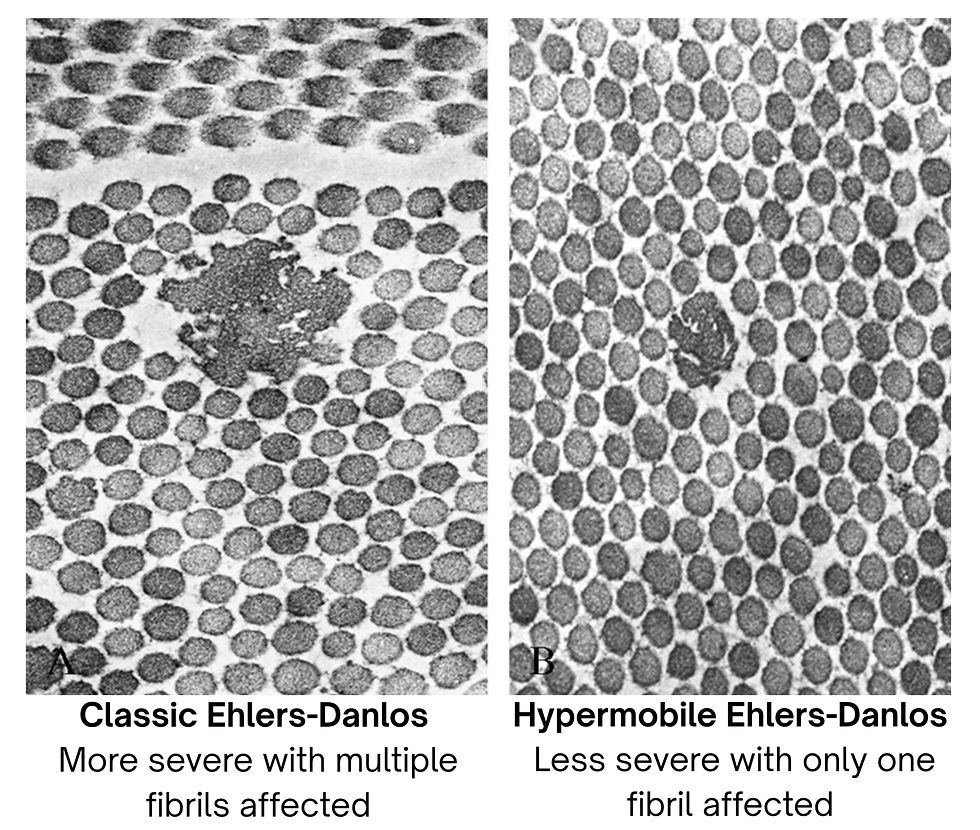
When we look up close at hypermobile tissues, we can see that the collagen fibrils occasionally form cauliflower shaped clusters, making the joints more fragile. Structurally speaking, the strongest arrangement of fibrils is a regular, repeating pattern, as seen in non-hypermobile tissues.

There are different types of hypermobility, and basically the bigger or more frequent the "cauliflower like" clusters are, the more severe your symptoms will be.
Hypermobility Symptoms
Because your body is comprised of tissues, a disorder that causes fragile tissues will have a broad impact on your life. Currently, doctors will use a Beighton Score to determine if you are hypermobile along with certain other criteria depending on which type of hypermobility you are being evaluated for.

You earn one point for each joint that extends beyond its normal range (left and right side are assessed separately, so you would get one point for each side):
Left and right pinky
Left and right thumb
Left and right knees
Left and right elbows
Being able to touch the floor
There are nine possible points. To be considered hypermobile, you need 5/9 points in adults, 6/9 points in children (before puberty), and 4/9 points in adults over age 50.
However, there are major criticisms of the Beighton scoring system, with a major overhaul likely coming in 2026 or 2027. These are some of the main critiques of the current system:
It does not test the whole body. Any joint on your body could potentially be hypermobile. Assessing 9 joints is not necessarily reflective of the rest of your body. For example, my neck is extremely hypermobile, where I can touch the back of my head to my shoulders, but this is not captured in my Beighton score because it's not a joint they assess.
It does not properly account for muscle tightness. Remember how I mentioned that muscles can overcompensate for loose joints by becoming extremely tight? This might mean an otherwise hypermobile joint doesn't appear to hyperextend during this test. My leg muscles have been extremely tight my entire life to compensate for hypermobile knees, so much that a doctor once suggested a surgery called achilles tendon lengthening when I was a child (luckily my mom said no). This tightness prevents me from touching the floor despite my back being bendy enough for it. As a result, I technically don't get a point for the spine assessment on the Beighton score even though my spine is very hypermobile and I frequently injure my back. My tight hamstrings also mean that when I'm standing, I don't appear to hyperextend my knees, so a doctor once erroneously excluded my knees from my Beighton score because he was just viewing them from a standing position. My wonderful physical therapist who specializes in hypermobility tested my knees correctly and showed that they indeed can hyperextend when the muscles are relaxed.
It does not properly represent that hypermobility is a spectrum and not binary. If your joints are just a few degrees shy of the target joint angle, then you don't get a point on the Beighton score. For example, my left thumb can easily touch my arms, but my right thumb is just barely shy. My right hand technically doesn't count, even though I've never seen a non-hypermobile person come anywhere close to this range of motion.

It does not reflect the impacts to the rest of your body. Hypermobility is far more complex than just hyperextending a few body parts. It has full body, multi-system impacts, but your Beighton score doesn't account for the coexisting health conditions you may have which are caused by your hypermobility.
Conditions linked to hypermobility
Hypermobility has broader implications than just the core physical traits it's associated with. The following list includes some of the conditions linked to hypermobility (Sources: 1, 2, 3, 4, 5):
Bones and joints
Mild scoliosis
Flat foot
Sway back (Lumbar hyperlordosis)
Nighttime musculoskeletal pain
Weak tissues at the base of the head (Craniocervical instability)
Abnormalities where the brain and spinal cord meet (Chiari malformation)
Frequent dislocations, especially ribs
Muscles
Low muscle tone
Fibromyalgia
Recurrent muscle aches and cramps
Muscle spasms
Skin and mucus membranes
Mildly hyperextensible skin
Velvety, silky, or soft skin texture
Poor wound healing
Stretch marks in young age
Small or post-surgical atrophic scars
White lumps on your heels while standing (Piezogenic papules)
Keratosis pilaris
Hernias
Organ prolapse
Easy bruising
Mucosal dryness and burning
Resistance to local anesthetic drugs
Mouth
Gum inflammation or recession
Abnormally thin or underdeveloped lingual frenulum
Sudden, intense electric shock sensation in the mouth
Gingivitis
Temporomandibular joint pain (TMJ)
Dental pains to cold or warm
Early-onset periodontitis
Pulp stones and abnormal dental roots
Crowded, malformed, and translucent teeth
Digestive and respiratory systems
Difficulty swallowing
Improperly functioning vocal cords
Obstructive sleep apnea
Gastroesophageal reflux or GERD
Heartburn
Inflamed stomach (Gastritis)
Unexplained abdominal pain
Food intolerances
Stomach emptying that is either overly slow or overly fast
Bloating
Nausea
Vomiting
Constipation
Crohn's Disease
Irritable bowel syndrome
Chronic inflammatory bowel disease and ulcerative colitis
Chronic micronutrient deficiencies
Small bowel overgrowth (SIBO) and leaky gut
Food intolerances, particularly to gluten
Gallbladder diseases, sometimes without the presence of stones
Sphincter of Oddi dysfunction
Cardiovascular and immune systems
Varicose veins
Low progressive aortic root dilatation
Cold intolerance and Pseudo-Raynaud's phenomenon
Mitral valve prolapse
Mast cell activation syndrome
Urinary and reproductive systems
Painful sex
Painful periods
Urinary stress incontinence
Unusually long or heavy periods
Abnormal uterine bleeding
Polycystic ovaries
Fibroids
Endometriosis
Long latent phases of labor with rapid progression
Uterine or vessel ruptures during labor and delivery
Risk of premature birth, breech presentation, and low muscle tone in babies born to hypermobile mothers
Eyes
Nearsightedness
Misaligned eyes
Upper eyelid drooping
Blue tint to the whites of your eyes
Brain
Dysfunctional autonomic nervous system (Dysautonomia e.g. POTS)
Clumsiness
Difficulty with accurately interpreting movement and spatial orientation (Proprioceptive dysfunction)
Abnormal skin sensations like tingling, prickling, numbness, or "pins and needles"
Headache
Fatigue
Sleep disturbances
Cognitive impairment
Anxiety
Overwhelming sensitivity to smells, noises, or other sensory stimuli
Risks for surgery
Hypermobility creates a number of risk factors for surgeries, with one study showing that resistance to local anesthesia occurred in 88% of hypermobile patients. Doctors can be dismissive of this during operations, believing they gave you a normal dose of anesthesia, so the pain must be in your head (it's definitely not). Researchers believe this may be caused by the injected drugs being rapidly diffused away from the injection site before they can take effect due to increased permeability of your collagen. This phenomenon would be worsened by inflammation, and hypermobile people generally have persistent, widespread inflammation.
Another hypothesis stems from genetic differences on the nerve receptors that perceive pain. Basically, these receptors would normally send a message to your brain that you should feel pain whenever special channels are opened to allow sodium ions to flow through. Local anesthesia interrupts the pain signaling process by blocking these channels from opening up. Certain genetic differences may prevent local anesthesia from binding to those pain receptors and closing the channel, meaning your nerves are still fully functional.

The main risks of surgery for hypermobility center around a few key features of the disorder:
Tissues are more fragile than normal
Unusual responses to local anesthesia, including lack of effectiveness
Frequent dizziness and risk of fainting
Slow digestive system and delayed stomach emptying
Risk of joint dislocation or injury
If you have a supportive doctor, there are steps you can take to reduce your surgical risk factors. If you have an unsupportive doctor who is not familiar with hypermobility and is unwilling to collaborate with you, switch immediately. It simply isn't worth the risk.
The following suggestions come from this research paper written by experts. I am not a medical professional, I cannot give medical advice, and I am simply summarizing their work in a way that is easier to read for non-medical professionals. When you discuss these with your doctor, be sure to show them the actual research paper from the experts rather than my site, as the paper authors have the authority and credentials to communicate these topics to other medical professionals.
With that disclaimer, you and your doctor may want to explore the following options:
Preparing for surgery
Consider adjusting surgical fasting guidelines
Normal fasting guidelines may not be as effective for people with hypermobility. Due to delayed stomach emptying associated with hypermobility, you may need to eliminate solids sooner than other people and move to a liquid diet. Guidelines have also been shifting recently to allow people to consume liquids closer to their expected surgery (e.g. you can drink up to 2 hours before the surgery instead of stopping the night before). Drinking more liquids before surgery is especially important for hypermobile patients because we are prone to fainting due to dysautonomia, and dehydration can exacerbate this, so your doctor may consider allowing you to drink closer to the surgery. If they decide that it's unsafe, then there are alternative options they can use to keep you hydrated, such as administering an IV with saline before the surgery. Ultimately, you should always follow their guidance because having a full stomach during surgery can be extremely dangerous.
Load up on saline and possibly painkillers through IV before the surgery
Many hypermobile people have a comorbid condition called POTS, which (among other things) causes you to be lightheaded, particularly when shifting from sitting or lying down to standing. Due to the high fainting risk of hypermobile patients, some doctors will give you 1 to 2 liters of saline through an IV before surgery to prevent dehydration related fainting after the surgery is complete. Some doctors will also administer painkillers like acetaminophen (paracetamol) or ketorolac before the operation so patients are less likely to require opiates after the operation, since opiates can create a number of issues including releasing histamine and worsening slow digestion.
Consider Desmopressin (DDAVP) before surgery
Tissues are fragile with hypermobility, and some people have a tendency towards excessive bruising and bleeding. Several studies have shown that taking desmopressin before surgery, which causes you to retain water, can help to reduce the risk that a hypermobile patient will bleed excessively and require a blood transfusion during an operation.
During surgery
Ditch the lidocaine
One study showed that articaine, bupivacaine, and mepivacaine were the most effective local anesthetics for hypermobile people, with lidocaine and procaine being significantly less effective. Unfortunately, even the most effective local anesthetic, which was articaine, only worked in 30% of hypermobile test subjects. Additionally, large volumes and multiple doses are typically required, often with a delayed onset, so administering anesthetics should be an ongoing dialogue with your doctor until you are both confident that you cannot feel anything.
Consider regional blocks or general anesthesia over local anesthesia
Doctors generally try to use local anesthesia whenever possible over stronger methods because it has the fewest side effects and shortest recovery time. However, this risk analysis only applies to non-hypermobile people and does not account for the additional risk factors we take on. Insufficient anesthesia during a surgery is bad for everyone involved, and resistance to local anesthesia is a well documented occurrence with hypermobility. It is unfathomably painful and can lead to medical trauma for the patient, and it can leave the doctors vulnerable to a medical malpractice lawsuit if courts decide the doctors didn't properly account for the patient's risk factors.
Regularly reevaluate local or regional anesthetic effectiveness mid-procedure
Unsurprisingly, it has been shown that various anesthetic techniques such as peripheral nerve blocks also wear off more quickly than expected with hypermobility. Your doctor needs to check in with you more often than normal to ensure the anesthetic is still working.
Use an EEG to monitor general anesthesia depth
An EEG measures your brain activity, and during general anesthesia, your brain activity should drop if you've received a sufficient dose. Using an EEG to monitor anesthesia depth is a growing practice recommended (but not required) by the World Health Organization since 2018 in modern surgical settings. Despite this, it is not used in every case by every doctor, particularly because learning to read a surgical EEG is not part of standard residency training. Hypermobile people with comorbid dysautonomia (dysregulation of the autonomic nervous system, which controls heart rate and breathing) often have confusing vital signs, such as an elevated baseline heart rate with significant fluctuations. For this reason, vital signs alone without an EEG cannot be reliably used to determine if someone hypermobile has received a sufficient dose of general anesthesia, even in simple or fast surgeries. An anesthesiologist can get your dosage wrong, either by giving you too much or too little. If your dose is too high, you may experience nausea, vomiting, chills, delirium, or in extreme cases, brain damage or even death. If your dose is too low, you can wake up during the surgery. What's more horrifying is that anesthesia is actually a blend of several different medications, including a paralytic, so if you wake up, the paralytic will still be in effect and you won't be able to move your body to alert the surgeon. This can cause unfathomable amounts of pain and trauma, and new evidence suggests this happens to roughly 5% of patients. In both of these scenarios, the doctors leave themselves vulnerable to a lawsuit, so it is in everyone's best interest to take additional precautions.
Prepare for possible allergic reactions
Allergic reactions are common in hypermobility due to co-occuring mast cell activation syndrome. This doesn't just include medications. There are frequently documented cases of hypermobile/mast cell activation syndrome patients reacting to both titanium and polymer surgical clips (and numerous anecdotes on social media forums suggest this is far more common than you might expect). There can even be reactions to the adhesives used in surgical tape. Your doctor should be prepared to rapidly treat immediate reactions during surgery as well as monitor for delayed reactions during recovery. If you do react to something during surgery and your doctor needs to give you an antihistamine like diphenhydramine from an IV, it should be administered slowly over a period of at least five minutes to decrease the risk of a reaction to the chemicals leached from IV tubing. A continuous infusion of diphenhydramine may be helpful for patients who are highly reactive. It should be noted that certain painkillers, such as opiates, can cause you to release histamine. This is not the same thing as an allergic reaction, and it's normally not a problem for most people, but it can worsen the situation for people who are already highly reactive with a high baseline histamine load. Fentanyl, sufentanil, and ketamine are alternatives that do not trigger histamine release.
Monitor for hyperextensions during surgery
During surgery, you are placed in positions for long periods of time that are much more likely to cause injury or hyperextension. Doctors must ensure that all joints are fully supported at all times in anatomical positions, particularly the neck. When a neutral position can't be achieved, extra pillows or bolsters may be needed.
Consider fiberoptic intubation
If you are undergoing a surgery requiring general anesthesia, you will need intubation to help you breathe during the surgery. Traditional intubation techniques require your head and neck to be pulled backwards so the intubation equipment can be inserted, which can dislocate the temporomandibular joint of someone who is hypermobile. Your neck can also be very delicate, with spinal and neck related disorders such as chiari malformation or craniocervical instability being common. An alternative technique called fiberoptic intubation exists, but it is generally reserved for people with difficult airways because it is significantly more challenging for the anesthesiologist to perform compared to traditional techniques. Despite the complexity, it is still strongly recommended as a consideration for hypermobile patients.
Be cautious with mask ventilation to avoid ruptures
Your doctor will need to take extra precautions if you're using a mask ventilation to help with breathing. Because delayed stomach emptying is common with hypermobile patients, your stomach may still have food in it even if you followed all of the fasting guidelines correctly. If this is the case, the mask ventilation can push air into your body with too much force, which leads to stomach rupturing.
Use alternative methods to close open wounds
Tissue fragility is the defining feature of hypermobility. When deciding how to close up wounds, your doctor needs to keep in mind that you are likely to heal slowly with more scarring and that you are more likely to experience complications like tissue tearing. One method of closing wounds is cauterization, which is the process of intentionally damaging tissues, through chemicals or electricity. There are situations where cauterization is very important, like when a patient is bleeding profusely, when there is a high risk of infection, or when you intentionally want to remove the tissue, like with a tumor or growth, but it should be used as a last resort in patients who already have exceptionally fragile tissues. Alternatives to cauterization that stop bleeding include ligating or stapling vessels. For closing wounds, cutaneous sutures can be used, but they should be left in place twice as long, with adhesive tape used to prevent the scar from stretching. Surgical wounds should also be closed without tension to avoid tearing delicate tissues. Your doctor might need to use extra sutures that are either closer together or in multiple layers.
Post surgical recovery
Monitor for postdural puncture headaches
This is a form of headache that occurs when needles are inserted into your back for an epidural or during a spinal tap, generally to diagnose certain conditions or administer treatments like painkillers, chemotherapy, or antibiotics. However, people with hypermobility are at an elevated risk of developing a complication called a postdural puncture headache, where your spinal fluid leaks out of the puncture hole and causes a severe headache. This headache can last up to 2 weeks. While this is generally not life threatening, it is deeply unpleasant with a slim chance of developing severe side effects for cases that last longer. If you experience this condition, you should avoid being in an upright position and increase fluid intake, potentially through an IV. Other more aggressive management techniques have been documented with mixed success. It is also important for your doctor to use a small-gauge, pencil-tipped, noncutting spinal needle to help prevent this from developing in the first place.
Evaluate for hidden injuries, like occult bleeding
Because our tissues are so fragile, we often sustain injuries from benign surgeries that may seem unexpected to doctors. For example, our airways may be damaged by the placement and removal of intubation. We also may experience something called occult bleeding (bleeding in your gastrointestinal system that is not visible to the naked eye) from relatively benign procedures like an endoscopy. Symptoms of occult bleeding can include lightheadedness or fainting, difficulty breathing, and chest or stomach pain. If the injury is severe and is left untreated, it can cause anemia, shock, or even death, so it is important for your doctor to monitor you and assume your likelihood of experiencing this is much higher than a typical patient.
Take extra precautions in case of fainting
Surgery can impact anyone's blood pressure and stability, but because many people with hypermobility also have various forms of dysautonomia, the potential for fainting post-operatively is much higher (dysautonomia means dysfunction in your autonomic nervous system, which controls the bodily processes you don't actively think about, like heart rate and breathing). This is risky because you can fall and hit your head or injure yourself in some other way. You may need to remain laying down and receive more assistance than an average patient during recovery. If your blood pressure drops too low, consuming salt and electrolytes or receiving an IV to maintain hydration can be helpful.
Avoid taking opioids and NSAIDs without PAMORAs
Many hypermobile people have issues with gut dysmotility, such as delayed stomach emptying. Opioids and NSAIDs can slow down the digestive system even further, potentially leading to narcotic bowel syndrome or opioid-induced constipation. It should be noted that laxative products, bowel regimens, dietary changes, and lifestyle modifications have been shown to be insufficient at fully preventing opioid-induced constipation. If possible, use medications that don't impact gut motility, such as acetaminophen (paracetamol). That said, acetaminophen is a much weaker pain management option, so if stronger medications are necessary, the risks can be mitigated. For opioids, you should ask your doctor about combining them with peripherally acting mu-opioid receptor antagonists (PAMORAs), such as methyltrexone, naldemedine, and naloxegol. These medications counteract some of the effects of opioids on the body without crossing the blood-brain barrier, meaning you will still get the painkiller effect of opioids without them slowing down your digestive system quite as much. Hypermobile people may also be less responsive to opioids and may require a higher dose. Ketamine may be another alternative your doctor can explore, especially if you are experiencing neuropathic pain after surgery.
What can you do?
As you can see, hypermobility is more than just... hypermobility. So what can you do? The most important action you can take is self-advocating for your own care. You aren't only helping yourself when you share this information with medical providers. You are also helping the entire community of hypermobile people who come to that same doctor after you.
Unfortunately, not all doctors are open-minded, especially because this is a "newer" condition they didn't learn about in medical school (or if they did, typically they are taught that it's exceptionally rare). Sometimes, you might need to be somewhat forceful to ensure they are taking you seriously. If the idea of respectfully but firmly self-advocating feels overwhelming, or if you're the type of person who freezes up in the moment, that's where coaching can help. One of the things we can work on together is formulating and practicing scripts you can use for your discussion with your doctor.
The biggest thing to remember is that you're not alone. There is an ever growing community of people who are learning that they are hypermobile, and collectively, we are making huge strides in raising the global awareness of these conditions. We all have the ability to be part of the change. Share knowledge and spread the word!
** As always, this article is provided for educational and informational purposes only and does not constitute providing medical advice or professional services. The information provided should not be used for diagnosing or treating a health problem or disease, and those seeking personal medical advice should consult with a licensed physician.
Sources
The following sources are listed alphabetically and not in the order they appear in the article. I have hyperlinked each source inline in the article so you can see exactly where it's used.
Anderson, Linda K. “CE.” AJN, American Journal of Nursing, vol. 115, no. 7, Ovid Technologies (Wolters Kluwer Health), July 2015, pp. 38–46, https://doi.org/10.1097/01.naj.0000467274.82951.57. Accessed 13 July 2026.
---. “CE: Nursing Management of Patients with Ehlers–Danlos Syndrome.” AJN the American Journal of Nursing, vol. 115, no. 7, July 2015, p. 38, https://doi.org/10.1097/01.NAJ.0000467274.82951.57. Accessed 12 July 2026.
Barry Nace (1944-2021. “5 Anesthesia Errors and the Injuries They Cause.” Nace Law Group, 18 July 2019, https://www.washingtondcinjurylawyers.com/5-anesthesia-errors-and-the-injuries-they-cause/. Accessed 13 July 2026.
Brockway, Laura. “Gastrointestinal Problems in Hypermobile Ehlers-Danlos Syndrome and Hypermobility Spectrum Disorders – the Ehlers-Danlos Support UK.” Ehlers-Danlos.Org, 2018, https://www.ehlers-danlos.org/information/gastrointestinal-problems-in-hypermobile-ehlers-danlos-syndrome-and-hypermobility-spectrum-disorders/. Accessed 12 July 2026.
Carroll, MB. “Hypermobility Spectrum Disorders: A Review.” Rheumatol Immunol Res, vol. 4, no. 2, July 2023, pp. 60–68, https://doi.org/10.2478/rir-2023-0010.
Castori, Marco. “Joint Hypermobility Syndrome (A.K.A. Ehlers-Danlos Syndrome, Hypermobility Type): An Updated Critique.” Giornale Italiano Di Dermatologia E Venereologia : Organo Ufficiale, Società Italiana Di Dermatologia E Sifilografia, vol. 148, 2013, pp. 13–36, https://www.researchgate.net/publication/235620197_Joint_hypermobility_syndrome_aka_Ehlers-Danlos_Syndrome_Hypermobility_Type_An_updated_critique. Accessed 12 July 2026.
Chopra, P., and L. Bluestein. “Perioperative Care in Patients with Ehlers Danlos Syndromes.” Open Journal of Anesthesiology, vol. 10, 2020, pp. 13–29, https://doi.org/10.4236/ojanes.2020.101002.
Csecs, Jenny L. L., et al. “Joint Hypermobility Links Neurodivergence to Dysautonomia and Pain.” Frontiers in Psychiatry, vol. 12, no. 12, Feb. 2022, https://doi.org/10.3389/fpsyt.2021.786916.
Eccles, Dr. Jessicca. “Hypermobility, Pain & Neurodivergence.” Neurodivergence Wales, 2023, https://neurodivergencewales.org/wp-content/uploads/2023/10/Dr-Jessica-Eccles-Hypermobility-Pain-Neurodivergence.pdf.
Jacobs, Darren. “Fiberoptic Intubation.” Nysora, 3 Mar. 2023, https://www.nysora.com/anesthesia/fiberoptic-intubation/. Accessed 12 July 2026.
kate. “Neuromonitoring and Anesthesia: Why Is It Important to Understand Your EEG Monitor? - California Society of Anesthesiologists.” California Society of Anesthesiologists, 19 Aug. 2024, https://csahq.org/2024/08/19/neuromonitoring-and-anesthesia-why-is-it-important-to-understand-your-eeg-monitor/. Accessed 12 July 2026.
Mao, Jau-Ren, and James Bristow. “The Ehlers-Danlos Syndrome: On Beyond Collagens.” Journal of Clinical Investigation, vol. 107, no. 9, May 2001, pp. 1063–69, https://doi.org/10.1172/jci12881.
Mayo Clinic. “Gastrointestinal Bleeding - Symptoms and Causes.” Mayo Clinic, 2020, https://www.mayoclinic.org/diseases-conditions/gastrointestinal-bleeding/symptoms-causes/syc-20372729. Accessed 12 July 2026.
Pergolizzi Jr, Joseph V, et al. “The Use of Peripheral μ-Opioid Receptor Antagonists (PAMORA) in the Management of Opioid-Induced Constipation: An Update on Their Efficacy and Safety.” Drug Design, Development and Therapy, vol. 14, Mar. 2020, pp. 1009–25, https://doi.org/10.2147/DDDT.S221278. Accessed 12 July 2026.
Plewa, Michael C, et al. “Postdural Puncture Headache.” Ncbibooks, StatPearls Publishing, 15 Feb. 2025, https://www.ncbi.nlm.nih.gov/books/nbk430925/#article-29339.s10:~:text=go%20to%3a-. Accessed 13 July 2026.
Ramcharan, DN, et al. “Diagnosis and Management of a Hypersensitivity Reaction to Titanium-Containing Surgical Clips: A Case Report.” Cureus, vol. 15, no. 2, Feb. 2023, p. e34929, https://doi.org/10.7759/cureus.34929.
Robson, David. “What Happens When Anaesthesia Fails.” Bbc.Com, BBC Future, 2019, https://www.bbc.com/future/article/20190313-what-happens-when-anaesthesia-fails. Accessed 12 July 2026.
Schubart, Jane R., et al. “Resistance to Local Anesthesia in People with the Ehlers-Danlos Syndromes Presenting for Dental Surgery.” Journal of Dental Anesthesia and Pain Medicine, vol. 19, no. 5, XMLink, 2019, p. 261, https://doi.org/10.17245/jdapm.2019.19.5.261. Accessed 13 July 2026.
Spanos, Alan. EDS for the Gastroenterologist. 2024, https://rachelleepac.com/wp-content/uploads/2024/02/9-EDS-for-the-Gastroenterologist-1.pdf. Accessed 12 July 2026.
The Ehlers-Danlos Society. “Assessing Joint Hypermobility | the Ehlers Danlos Society.” The Ehlers Danlos Society, 2016, https://www.ehlers-danlos.com/assessing-joint-hypermobility/. Accessed 12 July 2026.
Xiao, Yitong, et al. “Removal of Polymer Clips from the Gallbladder Fossa in a Patient with Ehlers-Danlos Syndrome (EDS) to Treat Mast Cell Activation Syndrome (MCAS): A Case Report.” Cureus, Springer Science and Business Media LLC, Jan. 2023, https://doi.org/10.7759/cureus.33704. Accessed 13 July 2026.
Xu, Hong, et al. “Comparison of Cutting and Pencil-Point Spinal Needle in Spinal Anesthesia Regarding Postdural Puncture Headache: A Meta-Analysis.” Medicine, vol. 96, no. 14, Wolters Kluwer Health, 2017, p. e6527, https://doi.org/10.1097/MD.0000000000006527. Accessed 12 July 2026.
“Anesthesia for Ehlers Danlos Syndrome.” Painri.Com, 2025, https://www.painri.com/post/anesthesia-for-ehlers-danlos-syndrome. Accessed 13 July 2026.
“Cauterizing a Wound: When It’s Done and When It’s Safe to Do.” Healthline, 10 July 2021, https://www.healthline.com/health/cauterizing-a-wound. Accessed 12 July 2026.
“Hypermobility Syndromes Association (HMSA).” Hypermobility Syndromes Association (HMSA), https://www.hypermobility.org/. Accessed 12 July 2026.
“Local Anesthesia Resistance: Causes and Implications - Kentucky Anesthesia Partners.” Kentucky Anesthesia Partners, 22 Feb. 2021, https://kentuckyanesthesiapartners.com/local-anesthesia-resistance/. Accessed 12 July 2026.
“Preoperative Fasting – One Size Does Not Fit All | IARS.” Iars.Org, 2024, https://iars.org/2024-the-daily-dose/preoperative-fasting/. Accessed 12 July 2026.
“Side Effects of Too Much Anesthesia | Wagner Reese, LLP.” Wagner Reese, 7 Feb. 2024, https://www.wagnerreese.com/blog/side-effects-of-too-much-anesthesia/. Accessed 12 July 2026.
Comments